
SMT 3225 TCXO oscillator 28.8Mhz 0.5ppm (Temperature Compensate crystal Oscillator) for RTL SDR USB dongle modification with ch


SMT 3225 TCXO oscillator 28.8Mhz 0.5ppm (Temperature Compensate crystal Oscillator) for RTL SDR USB dongle modification with ch
What is a TCXO?
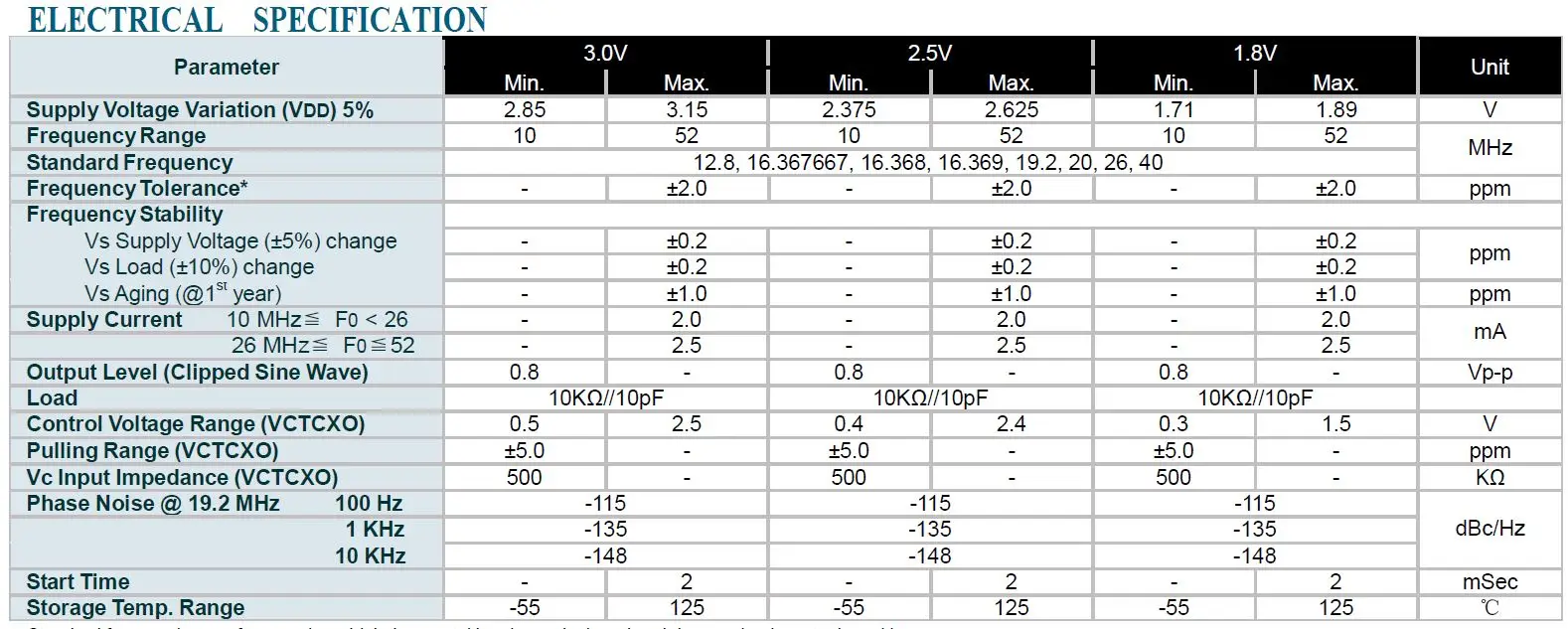
TCXO is the Crystal Oscillator with good temperature characteristics of Crystal unit and opposite temperature characteristics circuit (temperature compensation circuit) across a wide temperature range.
TCXO stands for Thermally Compensated Cystal Oscillator.
It is a very stable master oscillator so that the frequencies indicated by the radio's display are acurate and stable. Most TCXO's have worst case specifications around 1 ppm, some better, some a little worse. That means 1 Part Per Million, that means the stability is better than 28.8 Hertz at 28.8M MHz . Radios without a TCXO may have specifications around 10 PPM.
Why would I want/need one?
For accurate frequency tuning even amongst large temperature in an SDR, a Temperature Compensated Crystal Oscillator (TCXO) should be used as the main
oscillator. Standard RTL-SDR dongles used a frequency of 28.8 MHz and do not come with a TCXO,The biggest problem though, is that 28.8MHz TCXO oscillators are not commonly found for sale in
low quantities.
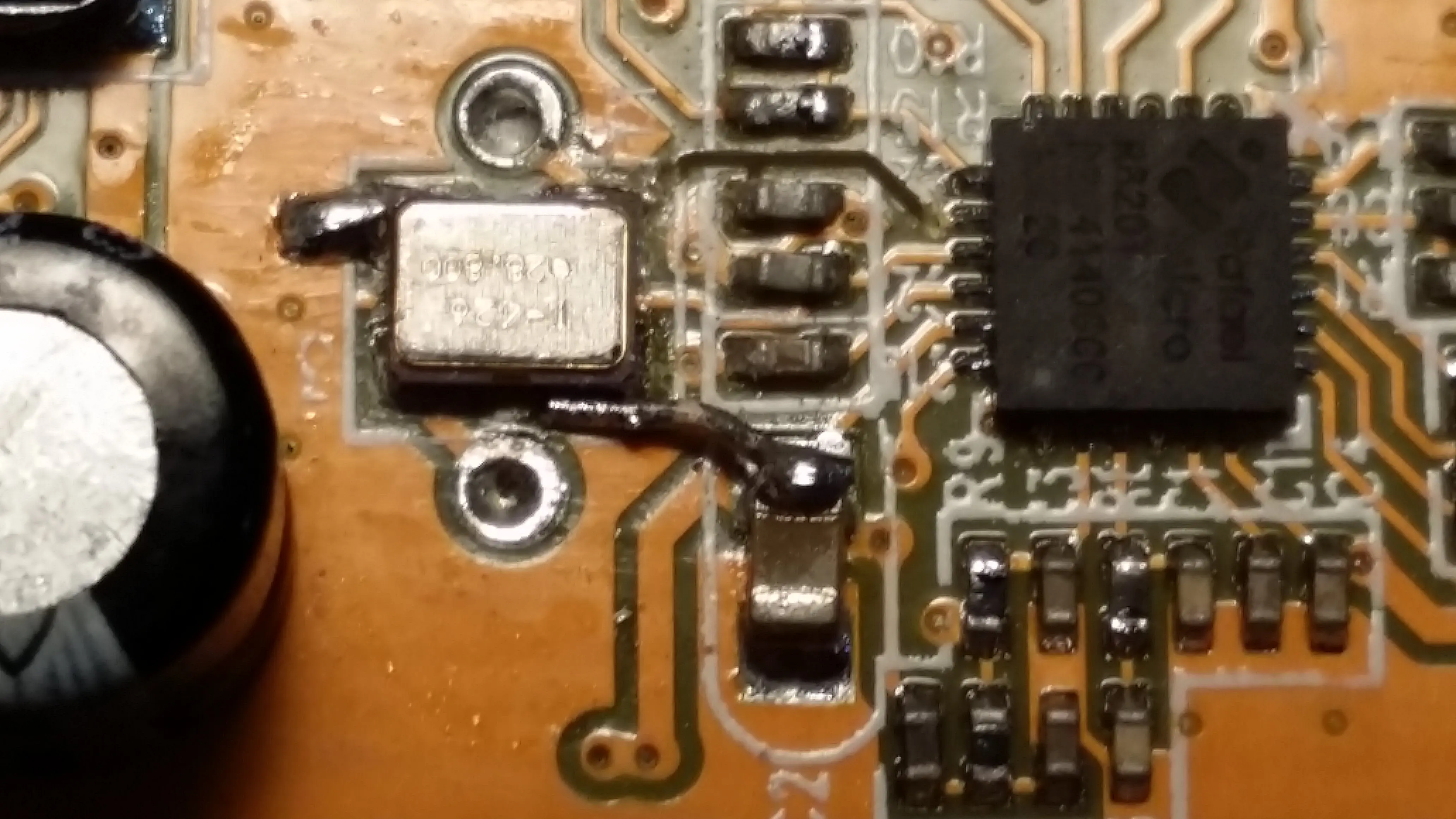
The modified TCXO dongle is based on a standard full sized R820T RTL-SDR PCB board. Inside we can see that the standard 28.8 MHz oscillator has been
removed and in its place is a 28.8 MHz TCXO oscillator. The old oscillator has been removed and the new oscillator is carefully soldered in its place. The soldering
job appears to be nice and tidy.
RTL SDR need TXCO
Next we tested the TCXO dongle against a control RTL-SDR which had a standard non-TCXO oscillator. First we measured the PPM offset at room temperature
against a known ATIS signal. The TCXO dongle had an offset that was somewhere around 0.5 PPM. The control RTL-SDR had an offset of 60 PPM.
As the dongle heats up from use, the oscillator will experience thermal drift, causing the frequency offset to change. The TCXO should be immune to this problem
due to it’s temperature compensation circuitry. To test the TCXOs temperature compensation capabilities we placed both dongles in a freezer for 30 minutes and then
took them out and recorded their start and end PPM offsets after 30 minutes of operation. To simulate a warm environment the dongles were also placed under a
warm tungsten light during operation.
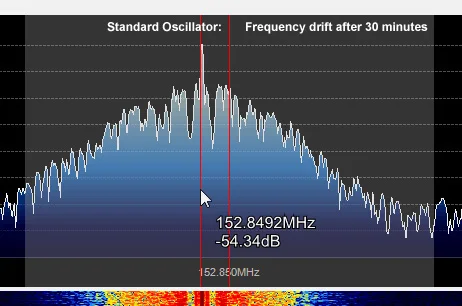
The control RTL-SDR started with an PPM offset of 58 PPM and ended with an offset of 72 PPM, giving a total drift of 14 PPM. The TCXO RTL-SDR dongle
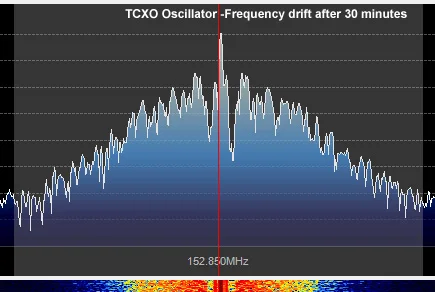
started with a PPM offset of ~0.5 PPM and ended with an offset of ~0.5 PPM, giving a total drift of 0 PPM.
Below we have recorded animated GIFs of the drift observed in both dongles. The first GIF shows the control RTL-SDR. Note how the frequency offset oscillates at
first and then slowly drifts away in one direction. The TCXO dongle exhibited no drift whatsoever.
Features
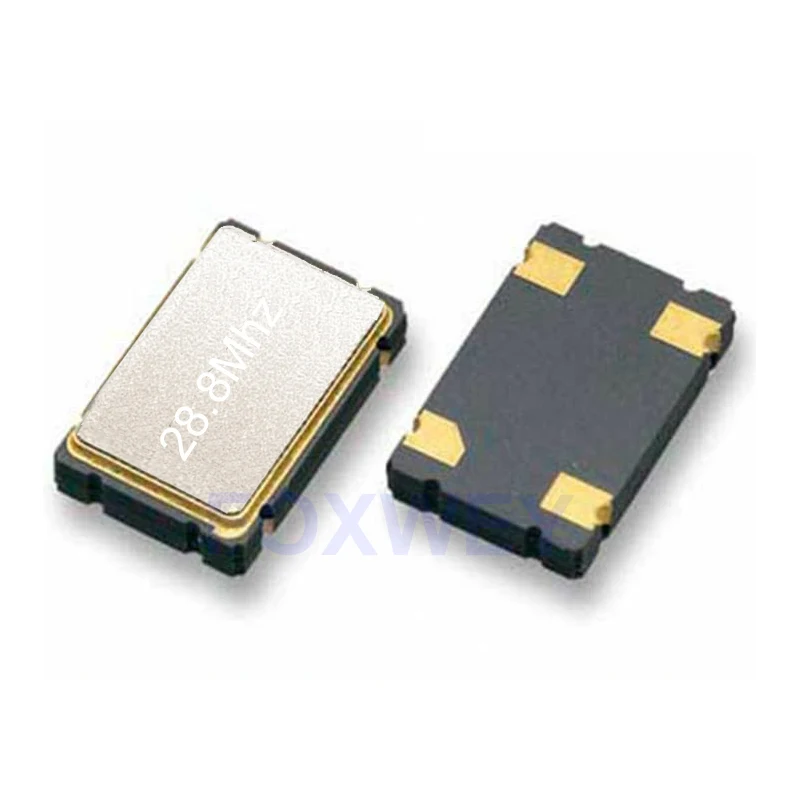
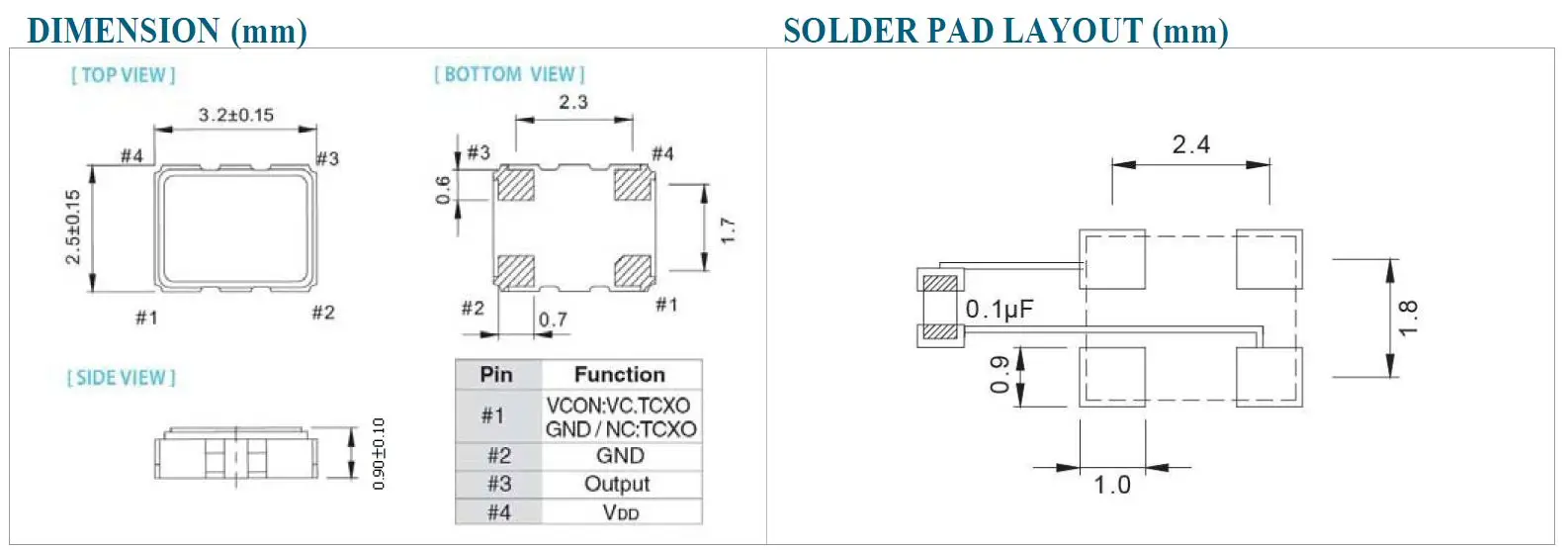
- Typical 3.2 x 2.5 x 0.9 mm ceramic SMD package
- For automatic assembly
- Compactness and light weight
- Low power consumption
- VCTCXO available
- Low thickness
TYPICAL APPLICATION
- GPS
- WLAN / WiMAX
- Mobile Phone
Sales Content
Sales content: 1pc of TXCO osillator 28.8Mhz
Note: We only sell TCXO without soldering support, and make sure you are skillful on modifying PCB and soldersing SMT before you place an order.